Why is GRC becoming essential for water utilities?
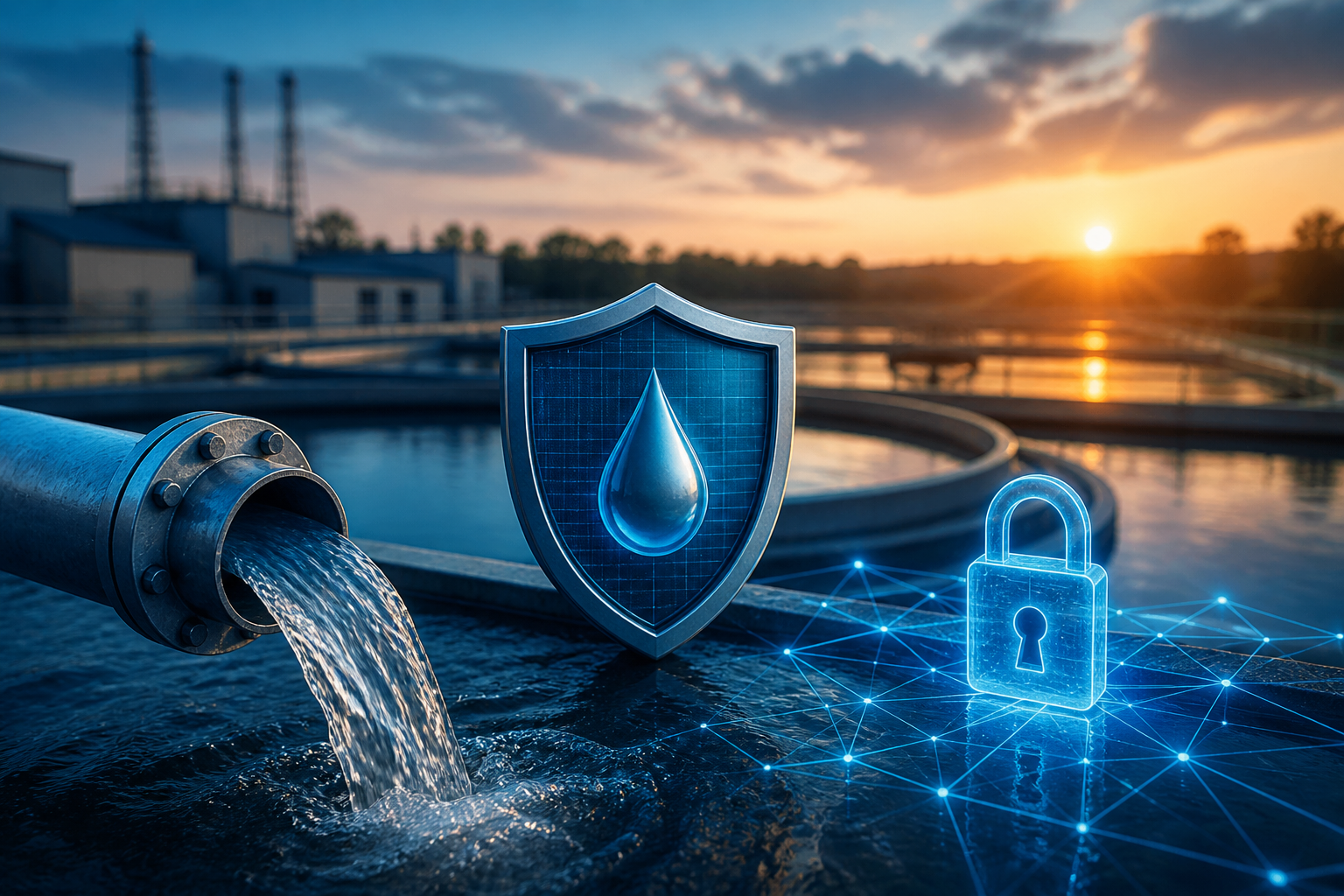
Only a few years ago, the water sector was not considered particularly exposed to cyber threats. Today, advancing digitisation and IT/OT integration significantly increase risk.
Water supply and wastewater activities are listed in Annex 1 to Poland’s NIS2 implementing law. Whether a particular entity is covered and its category depend on Articles 5 and 5a, including size, legal form and exceptions. A service’s societal importance does not itself establish formal critical infrastructure status.
Regulatory requirements are increasing too. NIS2 for water utilities requires systematic risk and compliance management. Organisations must therefore operate more deliberately and proactively.
What is GRC and how does it work in water utilities?
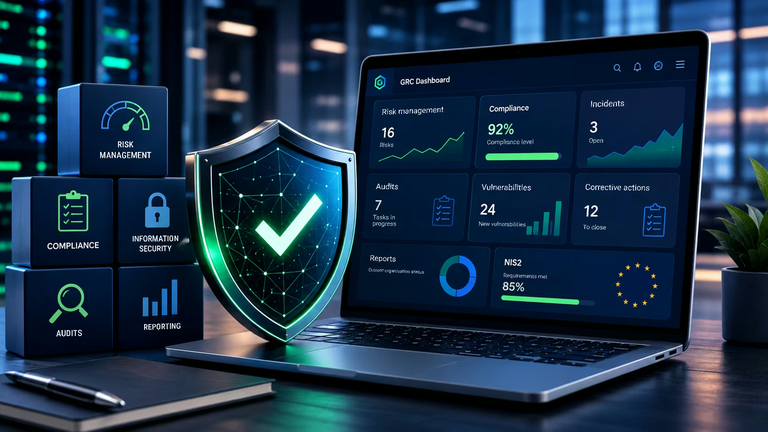
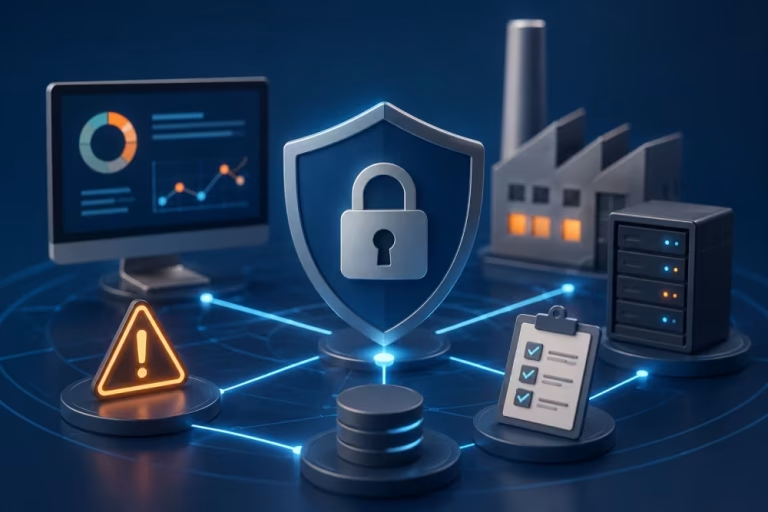
GRC (Governance, Risk & Compliance) combines organisational oversight, risk management and compliance. It replaces scattered activities with one coherent system.
This enables water utility GRC to identify risks, monitor incidents and oversee compliance with requirements such as NIS2. All data remains connected, supporting faster, more informed decisions.
The organisation gains full visibility, directly improving security management effectiveness.
NIS2 for water utilities: what requirements must be met?
NIS2 changes the security approach by focusing on real action rather than documentation alone. It requires active risk management and continuous environmental monitoring.
In practice, NIS2 for water utilities requires:
- a risk management system,
- incident monitoring,
- supplier oversight,
- reporting to supervisory authorities,
- board engagement.
The board also bears direct responsibility for decisions, making current data essential. GRC for water utilities consequently provides a foundation for regulatory compliance.
How do you implement GRC in a water utility step by step?
Implementation should be structured and phased. This reduces errors and improves effectiveness.
1. Identify water utility risks
Start by identifying potential threats, as informed risk management is otherwise impossible.
The analysis covers:
- IT systems,
- OT infrastructure,
- suppliers,
- human factors.
This stage underpins all subsequent work.
2. Assess risk using RCSA
Next, assess risks using RCSA (Risk & Control Self-Assessment). This determines the impact of threats on the organisation and establishes priorities.
It enables:
- determination of risk levels,
- assignment of owners,
- assessment of control effectiveness.
Decisions are then based on evidence rather than intuition.
3. Monitor and report
Identification and assessment alone are insufficient. Continuous monitoring enables a response to changing circumstances.
In practice, it includes:
- trend analysis,
- regular reports,
- board dashboards.
This supports fast, informed decisions.
4. Implement GRC tools
The law requires effective processes and appropriate controls, not the purchase of a GRC platform. Such software can help organise data, document actions and support oversight, depending on the organisation’s scale.
Water utility risk management: best practice
Effective risk management should be continuous. This means regularly updating data and monitoring control effectiveness.
Leading organisations:
- use dashboards,
- analyse trends,
- integrate data from different sources.
This supports proactive action rather than responding only after problems arise.
NIS2 compliance management for water utilities
Compliance should not be treated solely as a formal obligation. It should be integral to organisational management.
GRC for water utilities supports compliance through:
- compliance monitoring,
- gap identification,
- remediation management,
- reporting.
Particular attention should be paid to suppliers, as they often generate the greatest risk.
GRC software for water utilities: when can it help?
The law requires effective processes and appropriate controls, not the purchase of a GRC platform. Such software can help organise data, document actions and support oversight, depending on the organisation’s scale.
It enables:
- centralised data,
- automated processes,
- fast reporting,
- integrated information.
The organisation consequently operates more efficiently and effectively.
Common GRC implementation mistakes in water utilities
Despite growing awareness, many organisations still make mistakes arising from an unsuitable approach.
Common problems include:
- treating GRC as a one-off project,
- no board engagement,
- inadequate tools,
- scattered data.
The organisation consequently loses control of risk.
Summary: water utility GRC as a foundation for NIS2
GRC for water utilities is more than a response to regulatory requirements. Above all, it strengthens organisational resilience.
Because NIS2 introduces specific obligations, organisations need to implement:
- risk management,
- compliance management,
- appropriate tools.
This helps them meet regulatory requirements and genuinely improve security.